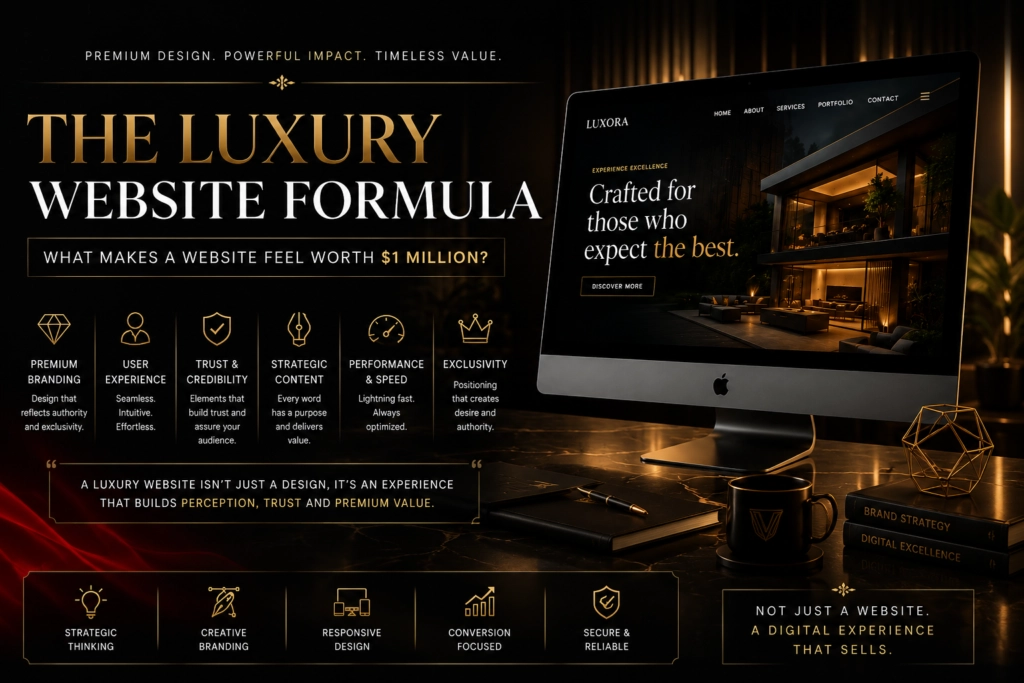
The Luxury Website Formula: What Makes a Website Feel Worth $1 Million?
Introduction: A Website vs. a Digital Asset luxury website design Almost anyone can put up a website today. What separates the ordinary from the extraordinary is the ability to project authority, exclusivity, and genuine value. Most sites function as little more than digital brochures — but the rare few that feel truly premium operate as strategic assets, shaping how people perceive a brand, building trust before a word is exchanged, and quietly driving higher-value conversions. Visitors form an opinion about a business within seconds of arriving on its site. That means design choices, information architecture, messaging, and overall usability all carry real weight in that first impression. Interestingly, a website that feels like a million-dollar investment doesn’t require a million-dollar budget. What it requires is intention — every element working together to signal professionalism and confidence. Once a business understands this underlying formula, it can turn an average website into a premium brand experience. The Three-Second Test Visitors judge a site’s quality almost instantly — often before they’ve read a single headline or clicked into a service page. That snap judgment happens in the first few seconds, which makes those seconds disproportionately important. A well-crafted, premium site builds an immediate sense of trust and sophistication. Premium sites also avoid confusion. Clean layouts, refined visuals, and deliberate design decisions lead visitors naturally through the experience rather than leaving them to figure it out on their own. The payoff for getting this right shows up in the numbers: businesses that pass this quick gut-check tend to see stronger engagement, better retention, and more conversions. Branding and the Perception of Value Luxury brands know that perception drives behavior, which is why premium websites invest heavily in visual identity. Every detail — from the logo mark to the choice of typeface — feeds into the larger brand story. Consistency is what makes that story stick. Premium brands apply the same visual language across every single page: matching colors, matching type, matching imagery, matching tone. That repetition builds recognition, and recognition builds trust. It’s not just about looking good — it’s about looking dependable. Why White Space Matters One hallmark of luxury design is restraint. Many businesses fall into the trap of cramming every inch of a page with content and promotions. Premium sites do the opposite — they understand that empty space isn’t wasted space. White space gives content room to breathe. It draws the eye to what matters and makes information easier to absorb. High-end brands lean on this deliberately, because generous spacing reads as confidence rather than emptiness. Done well, it elevates the entire experience rather than diminishing it. Typography as a Quiet Signal Most visitors won’t consciously register a font choice, but they’ll feel its effect anyway. That’s exactly why premium websites put real thought into typography. Luxury typography favors clarity and elegance over novelty. Thoughtfully paired fonts establish a visual hierarchy that makes content easier to scan and more pleasant to read. It’s one of the most overlooked tools in a designer’s kit — and one of the most effective at communicating professionalism without saying a word. Color as an Emotional Lever Color shapes emotion, and emotion shapes decisions — including purchasing decisions. Luxury websites choose their palettes with that connection in mind, aligning every shade with the brand’s positioning. Rather than reaching for flashy or overwhelming color schemes, premium brands tend to favor restraint: deep tones, warm neutrals, a touch of gold, and contrasts that feel intentional rather than accidental. That kind of palette does real work — it signals exclusivity and can turn an otherwise ordinary layout into something memorable. Visual Storytelling That Earns Its Keep How a brand looks visually has an outsized influence on how it’s perceived. That’s why luxury sites lean on professional photography and premium graphic work — nothing filler, everything purposeful. The best visuals go beyond showing a product or service; they tell a story about the lifestyle or outcome behind it. That narrative approach builds an emotional connection that a plain product shot never could, and it’s a big part of what makes a site feel premium rather than transactional. Simplicity as the Real Luxury A truly premium website feels effortless. Visitors move through it easily, find what they need quickly, and complete whatever action brought them there without friction. That kind of simplicity is often harder to achieve than complexity — it takes deliberate editing and a willingness to cut anything that doesn’t earn its place. Premium sites strip away distractions and focus attention on the interactions that matter most. The result is a smoother experience that translates directly into better satisfaction, stronger engagement, and higher conversion. Trust Signals: The Credibility Layer Even the most beautifully designed website falls flat if visitors don’t trust the business behind it. That’s where trust signals come in — testimonials, client reviews, case studies, certifications, awards, and visible security indicators all serve as proof behind the brand’s claims. These elements don’t just decorate a page; they reassure. Without them, even flawless design can leave visitors hesitant. With them, design excellence turns into genuine credibility. Content With a Purpose Premium websites don’t pad their pages with unnecessary text. Every headline, every paragraph, every call-to-action is there for a reason. The focus stays on clarity and persuasion rather than volume. Strong content leads with benefits, not just features — speaking directly to what the visitor needs and reinforcing the brand’s expertise along the way. That kind of precision keeps people engaged and reinforces the overall sense of quality. Speed: The Luxury Factor Nobody Sees Website performance is easy to overlook, but it shapes user perception more than most businesses realize. A fast-loading site signals competence; a slow one erodes trust almost instantly, often before a visitor even reads the first line of copy. Premium brands treat speed as part of the user experience, not a separate technical concern. Optimization isn’t an afterthought — it’s baked into the design process from the start. Exclusivity: Manufacturing Desire Luxury