
Introduction: The Power Behind Subtle Influence
Modern consumers live in a world saturated with advertisements. Every day, they encounter countless promotional messages across websites, social media platforms, search engines, and mobile applications. Consequently, traditional marketing tactics often struggle to capture genuine attention. People have become increasingly skilled at ignoring obvious sales pitches, making it more difficult for brands to stand out.
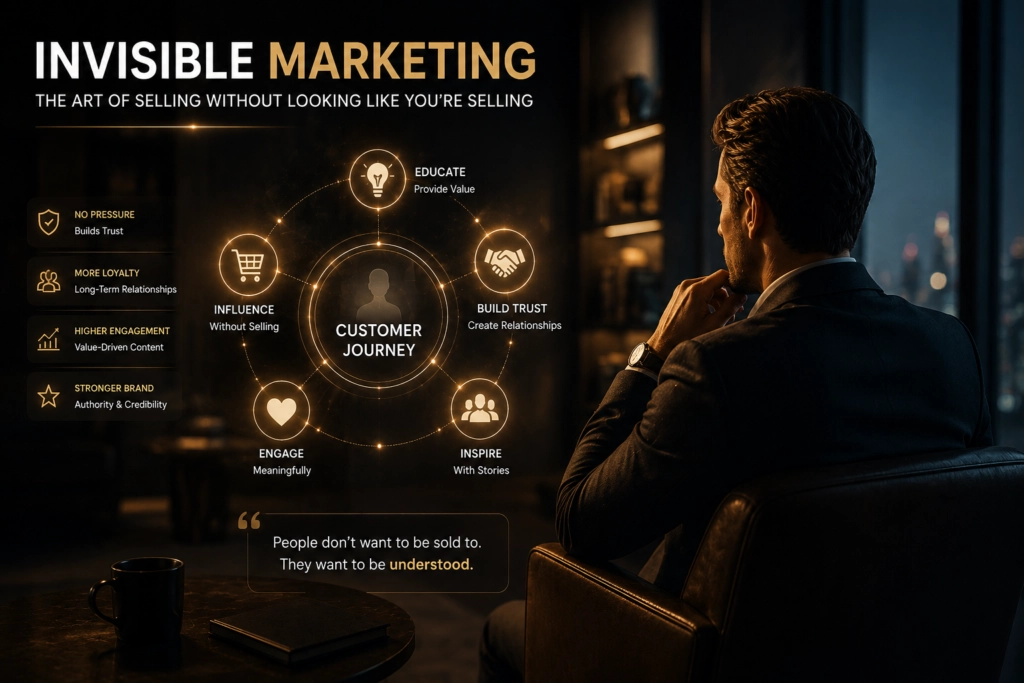
However, some of the world’s most successful brands achieve remarkable results without appearing overly promotional. Instead of pushing products aggressively, they focus on creating value, building relationships, and establishing trust. This approach is known as Invisible Marketing—the art of influencing purchasing decisions without making customers feel like they are being sold to. As a result, businesses that master this strategy often enjoy stronger customer loyalty, higher engagement, and long-term growth.
Understanding Invisible Marketing
Invisible Marketing is a strategic approach that prioritizes value over promotion. Rather than constantly asking customers to buy, businesses educate, entertain, and inspire their audience. Consequently, customers naturally develop trust and interest in the brand before making a purchasing decision.
Furthermore, Invisible Marketing aligns with modern consumer behavior. People prefer discovering solutions on their own rather than responding to direct sales pressure. Therefore, businesses that position themselves as helpful resources create stronger connections with potential customers. Instead of forcing a sale, they guide customers toward a decision through meaningful interactions and authentic communication.
Why Traditional Selling Is Losing Its Effectiveness
Traditional advertising still has value; however, consumer expectations have changed significantly. People now have access to unlimited information, reviews, comparisons, and recommendations. As a result, they rely less on advertisements and more on independent research when making purchasing decisions.
Moreover, aggressive sales tactics often trigger skepticism. Consumers question exaggerated claims and become cautious when they feel pressured. Consequently, brands that focus solely on selling may damage trust rather than strengthen it. In contrast, Invisible Marketing removes resistance by creating a positive experience that encourages customers to engage willingly.
The Psychology Behind Invisible Marketing
Human psychology plays a crucial role in purchasing behavior. People naturally prefer making decisions that feel self-directed. Therefore, when customers discover a product through valuable content or authentic recommendations, they feel more confident in their choice.
Additionally, individuals are more likely to trust information when it appears educational rather than promotional. For example, a detailed guide that solves a specific problem often generates more credibility than a direct advertisement. Consequently, businesses that provide genuine value can influence purchasing decisions without relying on hard-selling techniques.
Storytelling: The Heart of Invisible Influence
Stories have shaped human communication for centuries. Unlike traditional advertisements, stories create emotional connections that capture attention and inspire action. Therefore, storytelling serves as one of the most powerful tools in Invisible Marketing.
Furthermore, effective stories allow customers to see themselves in real situations. Rather than focusing exclusively on products, businesses can highlight customer journeys, brand values, and transformative experiences. As a result, audiences develop emotional attachments that strengthen trust and encourage engagement. A compelling story often sells more effectively than a promotional message because it resonates on a deeper level.
Content Marketing: Educating Instead of Selling
Content marketing represents one of the strongest examples of Invisible Marketing. Instead of promoting products directly, businesses create valuable content that helps their audience solve problems or achieve goals. Consequently, they establish themselves as trusted authorities within their industry.
Moreover, blogs, videos, podcasts, and educational resources provide opportunities to demonstrate expertise. When customers consistently receive useful information, they begin to associate the brand with reliability and knowledge. Therefore, when they eventually need a product or service, they naturally turn to the business they already trust.
Building Trust Through Authenticity
Trust remains one of the most valuable assets in modern marketing. Without trust, even the most sophisticated campaigns struggle to convert prospects into customers. Therefore, authenticity plays a critical role in Invisible Marketing.
Additionally, consumers appreciate honesty and transparency. They want to interact with brands that communicate openly and deliver on their promises. Consequently, businesses that share genuine experiences, realistic expectations, and authentic values create stronger relationships with their audience. Authenticity transforms marketing from a transactional activity into a meaningful connection.
Social Proof: Let Others Do the Selling
One of the most effective ways to sell without appearing to sell is through social proof. People naturally trust the opinions and experiences of others. Therefore, customer testimonials, reviews, and case studies can significantly influence purchasing decisions.
Furthermore, social proof reduces uncertainty. When potential customers see evidence that others have achieved positive results, they feel more confident in the brand. Consequently, businesses can increase credibility and conversions without relying heavily on promotional language. In many cases, satisfied customers become the most persuasive marketers a business can have.
Creating Experiences Instead of Advertisements
Successful brands understand that memorable experiences often outperform traditional advertisements. Instead of focusing solely on visibility, they create interactions that leave lasting impressions. Therefore, every customer touchpoint becomes an opportunity to strengthen relationships.
Moreover, exceptional experiences generate emotional responses. Whether through outstanding customer service, innovative website design, or personalized communication, businesses can create moments that customers remember. Consequently, these positive experiences encourage word-of-mouth referrals and long-term loyalty. Customers often become advocates because of how a brand makes them feel, not because of what it sells.
The Role of Personal Branding in Invisible Marketing
In today’s digital landscape, personal branding has become increasingly important. People trust individuals more readily than corporate logos. Therefore, founders, consultants, and industry experts can use their personal credibility to enhance business growth.
Additionally, personal branding allows businesses to humanize their marketing efforts. By sharing insights, experiences, and expertise, professionals establish authority while building trust. Consequently, audiences feel more connected to the person behind the brand. This connection often creates stronger engagement and higher conversion rates than traditional promotional strategies.
Long-Term Relationships Over Short-Term Sales
Many businesses focus on immediate results. However, Invisible Marketing emphasizes long-term relationship building rather than short-term transactions. Therefore, companies invest in nurturing trust before expecting a sale.
Furthermore, long-term relationships often generate greater lifetime value. Loyal customers make repeat purchases, recommend the brand to others, and contribute to sustainable growth. Consequently, businesses that prioritize relationships create a stronger foundation for future success. While direct selling may produce quick wins, relationship-focused marketing delivers lasting results.
The Future of Marketing Is Invisible
As consumers become more selective and informed, the effectiveness of aggressive advertising will continue to decline. Therefore, businesses must adapt by embracing more customer-centric approaches. Invisible Marketing offers a solution that aligns with modern expectations and behaviors.
Moreover, advances in technology provide new opportunities for personalized and value-driven communication. Brands can use data, automation, and content to deliver relevant experiences without overwhelming customers with sales messages. Consequently, the future belongs to businesses that prioritize trust, authenticity, and meaningful engagement over relentless promotion.
Conclusion: Mastering the Art of Selling Without Selling
Invisible Marketing represents a fundamental shift in how businesses connect with their audience. Instead of relying on pressure and persuasion, it focuses on trust, value, and genuine relationships. As a result, customers feel empowered rather than targeted, creating stronger connections and greater loyalty.
Ultimately, the most successful brands understand that people prefer to buy rather than be sold to. Therefore, businesses that educate, inspire, and support their audience can influence decisions more effectively than those that rely on traditional sales tactics. In a world filled with noise, Invisible Marketing provides a powerful way to stand out. By mastering the art of selling without looking like you’re selling, businesses can build credibility, strengthen relationships, and achieve sustainable growth for years to come.